

“We are working on Scolioscan every day and have started using it in clinical practice. So far we are using only ultrasound image (generated by Scolioscan) for follow-up on patients, combining with clinical findings and back surface topography. I did a little research on my own, using only high quality ultrasound image and there is a good correlation (0.7) between Cobb angle and Scolioscan angle.
We are really eager to expand our experience in 3D software reconstruction (Scoliostudio®) in the future, because we see a lot of benefits using Scolioscan and we think it is a great diagnostic tool that can possibly replace radiography.”
——Samra Pjanić, the Institute for physical medicine and rehabilitation “Dr. Miroslav Zotovic”
About Dr. Miroslav Zotovic
Institute for Physical medicine and rehabilitation “Dr Miroslav Zotovic” Banja Luka (RS/BH) is the biggest specialized institution for physical medicine and rehabilitation, orthopedic surgery and hyperbaric medicine in the region of Balkans.
Beside clinical practice, important practice areas of the Institute are undergraduate and postgraduate education, scientific research and CME for doctors, physiotherapists, occupational therapists, nurses, O&P technicians, psychologist, social workers and speech therapists.
The Institute’s Interdisciplinary Team for scoliosis is recognized for its expertise in conservative treatment of scoliosis.
Source:https://www.zotovicbl.com/
Their Pain Point and Our Solutions
(1) Frequent monitoring on Adolescent Idiopathic Scoliosis
Unlike traditional X-rays, Scolioscan operates without radiation, making it safe for frequent use, especially in screening adolescent.
(2) Evaluation of treatment effectiveness
The scoliosis team of the Institute specializes in conservative management of scoliosis, has leveraged the Scolioscan device and conducted thorough evaluations to assess the effectiveness of the treatment.
(3) Future research study
The scoliosis team expresses keen interest in integrating Scolioscan into both clinical practice and research endeavors. Previously, conducting this specific type of research without the availability of a radiation-free device was unfeasible. The advent of the Scolioscan system now enables comprehensive investigations, enhancing our understanding of scoliosis management and contributing to improved patient outcomes. This innovative technology represents a significant leap forward, allowing for precise assessments without the risks associated with traditional radiation-based methods.
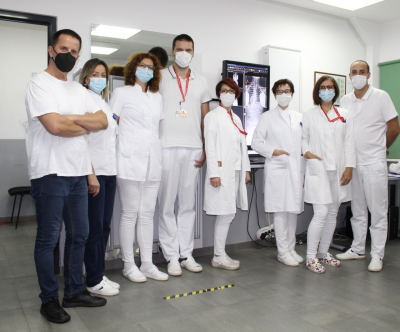
Figure 1. Team for scoliosis from the Institute for physical medicine and rehabilitation “Dr Miroslav Zotovic”
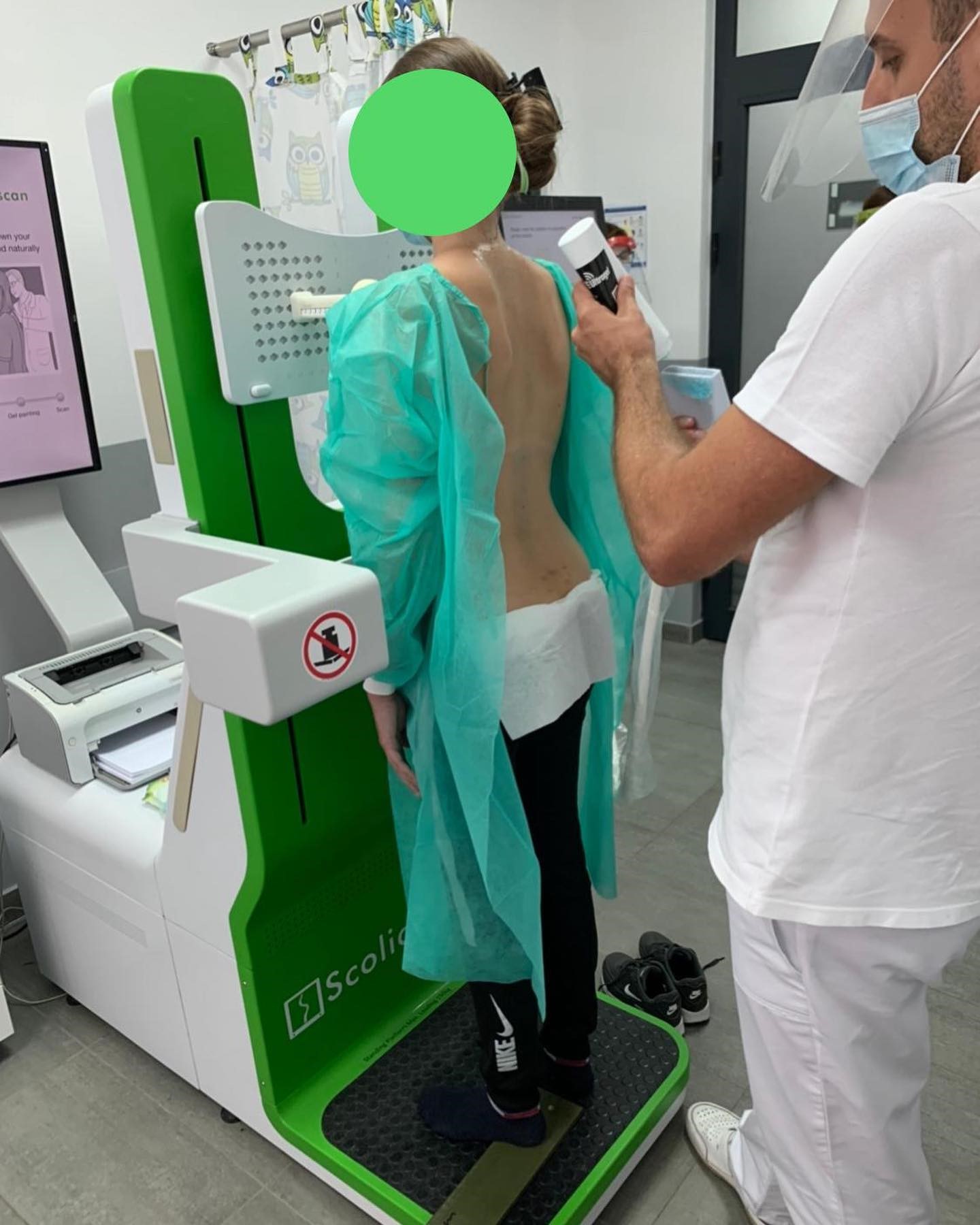
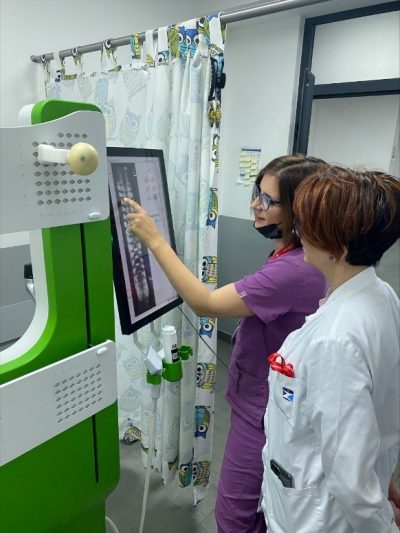
Figure 2. Scolioscan examination and analysis on a scoliosis patient