

Scolioscan is an advanced scoliosis monitoring device, which can measure the curvature and create an image of the spine using ultrasound, being graphically represented immediately. It is absolutely radiation-free, and calculates angle curvature automatically.
In the future, Scolioscan should help to ensure fewer X-rays need to be taken during follow-up checks.
——Asklepios Katharina-Schroth-Klinik
About Asklepios Katharina-Schroth-Klinik
Asklepios, founded in 1985, has grown into a global leader in healthcare. Asklepios Katharina-Schroth-Klinik stands out as one of the largest centers worldwide, specializing exclusively in the inpatient treatment of scoliosis and other spinal deformities. With a commitment to excellence, Asklepios continues to advance medical care and improve the lives of patients affected by these conditions.
Source:https://www.asklepios.com/bad-sobernheim/
Katharina Schroth, born February 22nd 1894 in Dresden Germany, was suffering from a moderate scoliosis herself and underwent treatment with a steel brace at the age of 16 years before she decided to develop a more functional approach of treatment for herself.
Inspired by a balloon, she tried to correct by breathing away the deformities of her own trunk by inflating the concavities of her body selectively in front of a mirror. She also tried to ‚mirror’ the deformity, by overcorrecting with the help of certain pattern specific corrective movements. She recognized that postural control can only be achieved by changing postural perception.
From 1921 this new form of treatment with specific postural correction, correction of breathing patterns and correction of postural perception was performed with rehabilitation times of 3 months in her own little institute in Meissen and in the late 30’s and early 40’s she was supported by her daughter, Christa Schroth.
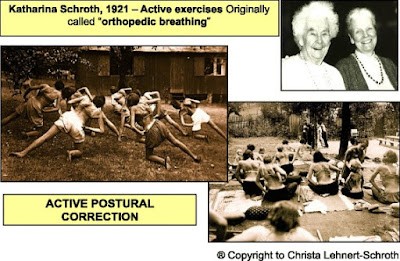
Figure 1 The upper right corner is a group photo of Katharina Schroth and her daughter Christa; the lower left corner is an outdoor training scene
After World War II, Katharina Schroth and her daughter moved to West Germany to open a new little institute in Sobernheim, which constantly grew to a clinic with more than 150 in-patients at a time, treated as a rule for 6 weeks. In the 80’s this institute was renamed to ‚Katharina Schroth Klinik.
Till now, the Asklepios Katharina-Schroth-Klinik is one of the largest centres worldwide, which is specialized exclusively in the in-patient treatment of scoliosis and other spinal deformities. It was possible to accommodate 188 patients in double and single rooms and team works together with patients for a successful rehabilitation in an area of 2.600 m².

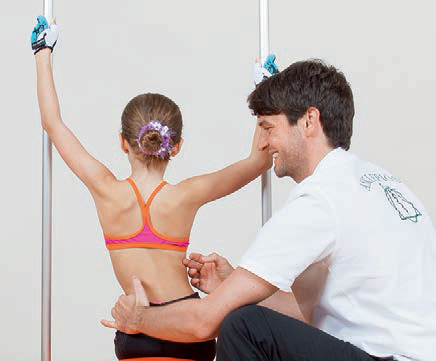
Figure2. Photos taken during the treatment
(Source: Asklepios Katharina-Schroth-Klinik)
Their Pain Point and our Solution
(1) Simple diagnosis procedures
The conventional X-ray diagnostic system can be intricate and challenging to master. In contrast, Scolioscan streamlines the process into just three simple steps: applying ultrasound gel to the patient’s back, utilizing an ultrasound probe to scan the spine from bottom to top, and lastly, performing automatic measurements.
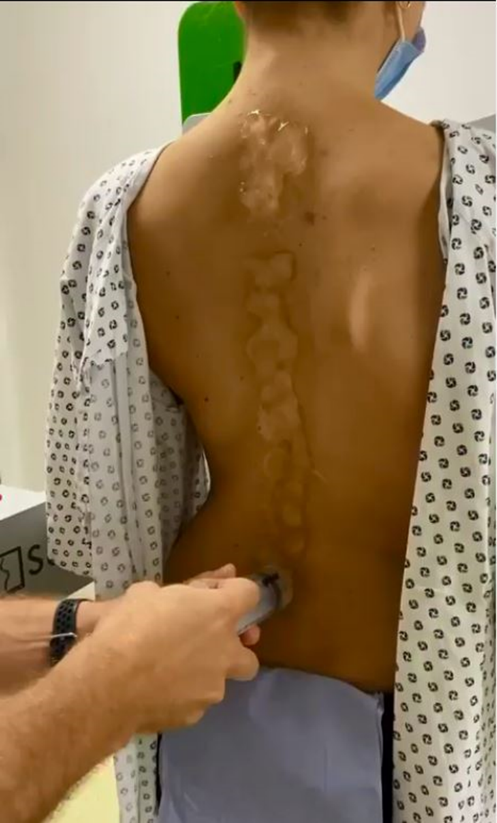
Figure 3. Spreading ultrasound gel on the patient’s back
(Source:Asklepiosklinik Bad Sobernheim on Instagram)
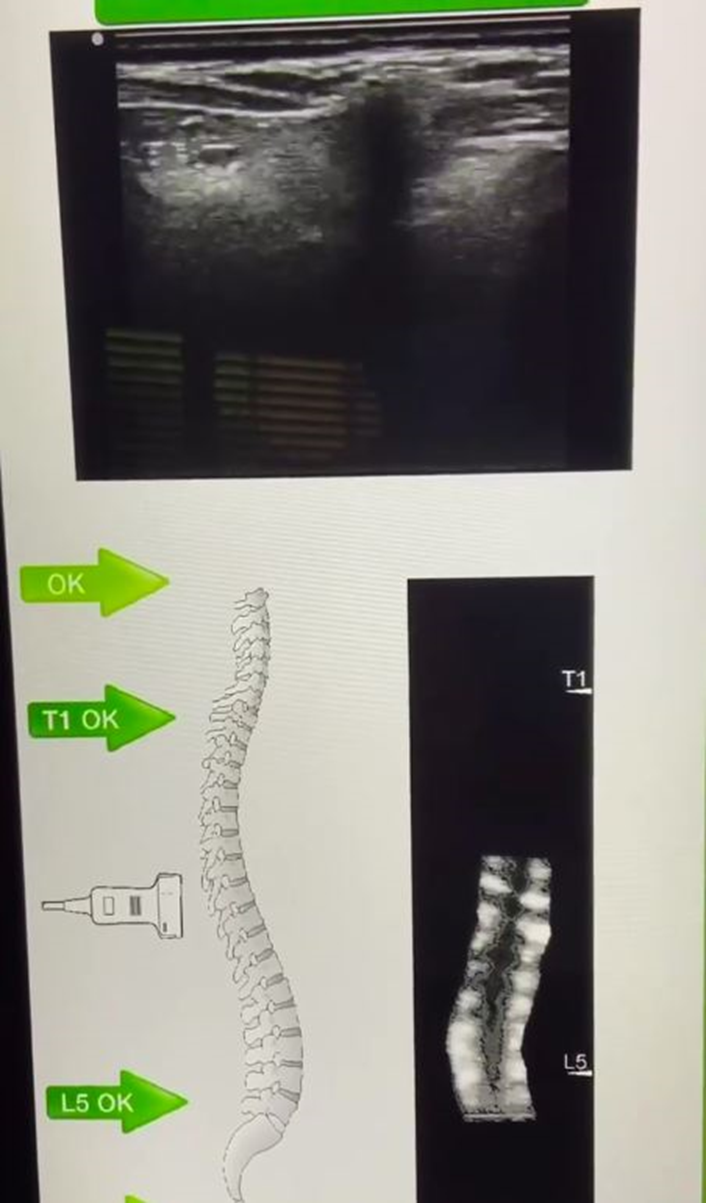
Figure 4. Using ultrasound probe to scan the spine from bottom to top
(Source:Asklepiosklinik Bad Sobernheim on Instagram)
(2) Early detection
Adolescent idiopathic scoliosis (AIS) is a prevalent spinal deformity observed in children between the ages of 10 and 16 years. During this period, children often exhibit mild or no symptoms, which contributes to the underdiagnosis of scoliosis in its early developmental stages. The Scolioscan system, being entirely radiation-free, offers a valuable tool for more frequent screening of children to detect and monitor scoliosis. Its non-invasive nature makes it particularly suitable for pediatric use.
(3) Continuous monitoring
In their comprehensive program, the primary objectives are to prevent curve progression and correct minor functional curves. Scolioscan plays a crucial role in achieving these goals by enabling continuous monitoring and evaluation of treatment outcomes. Its radiation-free approach makes it particularly well-suited for frequent assessments during the course of treatment.
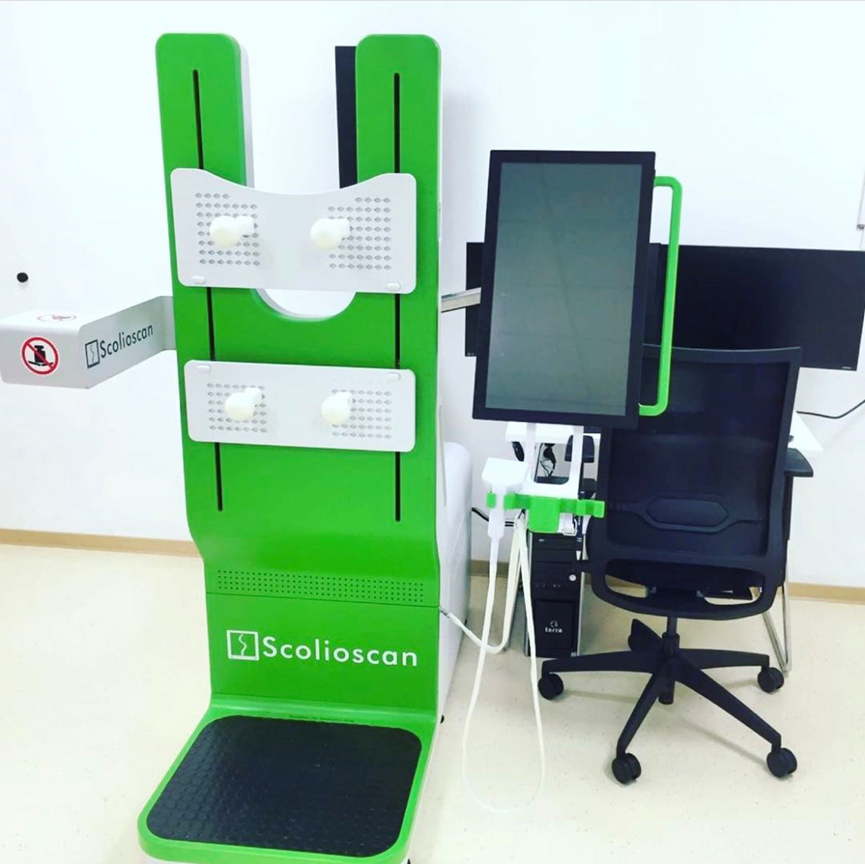
Figure 5. Scolioscan device installed in their clinic
(Source:Asklepiosklinik Bad Sobernheim on Instagram)